The 67% Problem: Why Most of Your Team Is Just Going Through the Motions (And What To Do About It)
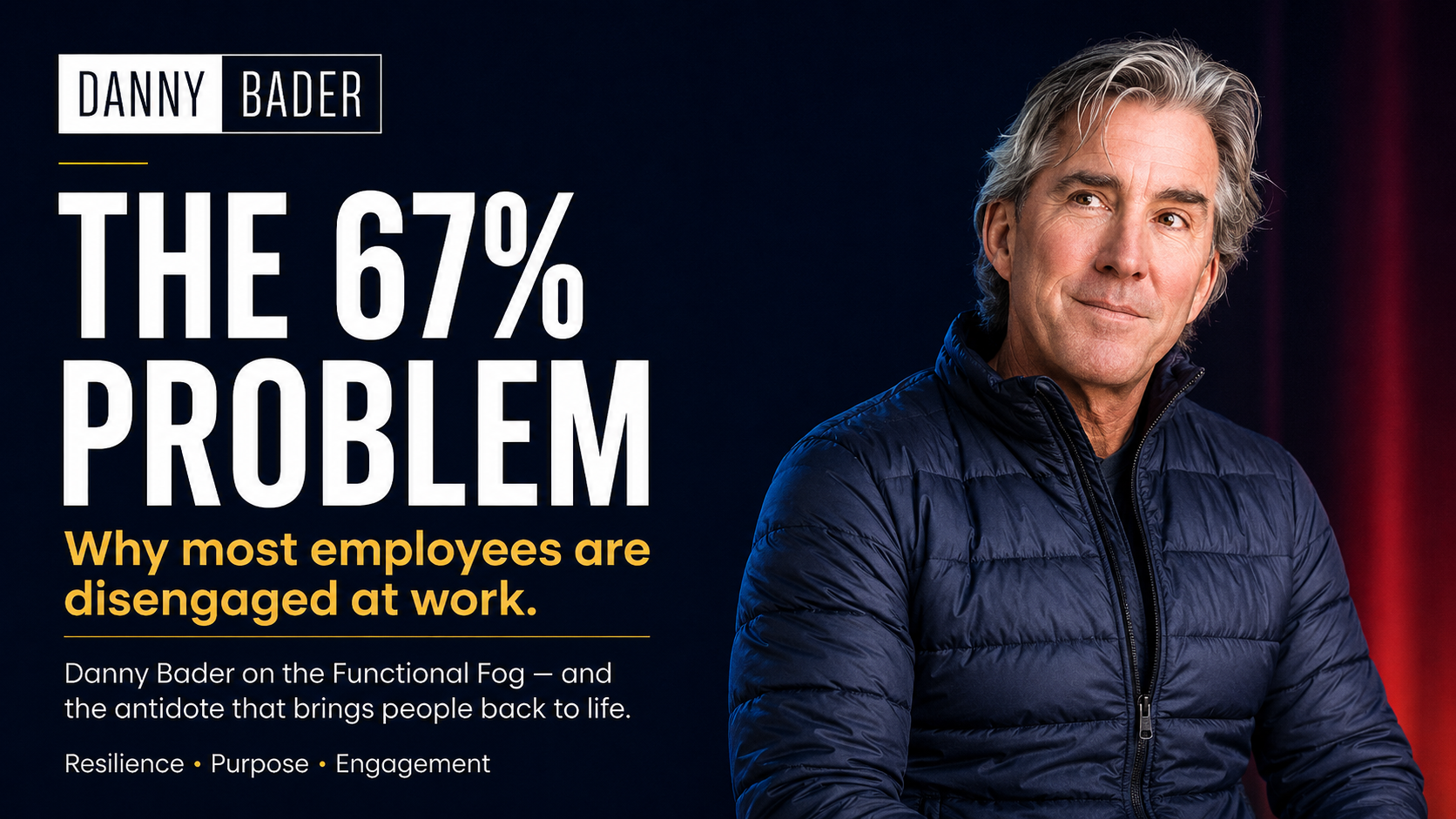
Why is employee disengagement so widespread? Because most disengaged employees are not unhappy. They are in a state I call the functional fog: just okay enough that they never do anything to change it. Roughly 67% of employees report they are simply going through the motions at work, a figure consistent with Gallup's long-running finding that only about a third of employees are truly engaged.
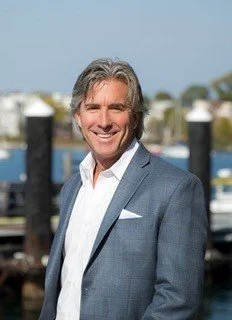
I'm Danny Bader, an employee engagement keynote speaker and bestselling author. In 1992 I survived an 8,000-volt electrical accident that killed my friend and coworker Bruce and stopped my own heart. I've spent the three decades since studying what separates people who are fully alive from people who are merely functioning, working with organizations including Marriott, Ritz-Carlton, Lincoln Financial, Reebok, and many of the major pharmaceutical companies.
When I first saw that 67% statistic, my reaction was probably the same as yours: wow, that's a big number. Then I reflected on my years inside team meetings at those companies, and I had a more unsettling thought. That number might be exactly right.
Why Are So Many Employees Disengaged at Work? The Functional Fog
I've come to understand there are three levels at which we engage with life. At the bottom is rock bottom, a dangerous place of disconnection I call the valley of the victim. Something happens and the questions take over: why am I going through this? What did I do to deserve this? At the top is what I call living with a radical reverence for your life, marked by passion, purpose, and resilience. And in the middle sits the functional fog, where that 67% lives.
The functional fog is not misery. That is precisely the problem. It's a land of white noise. It's not necessarily a bad place. It's okay. The thing is, it's just okay enough that you might not do anything to make it better. You might not drive any kind of change. Weeks become months, months become years, and you look back five years later and go, oh my gosh, where has the time gone?
You know the fog when you hear it. Ask someone how they're doing and they answer "living the dream" or "another day in paradise," and the response is dripping with sarcasm. It's Monday through Friday, and you don't feel as good on Monday as you do on Thursday, because the weekend's coming.
If you're a leader, the math is sobering. Seven out of ten people on your team may be showing up without being present. How can that be good for culture, for teamwork, for innovation? How can that be good for leadership?
The Signs of a Disengaged Employee Leaders Actually See
Employee disengagement rarely announces itself. On the outside, people bring the energy and the enthusiasm. But when I talk with them one on one, away from the team meetings, I hear something different: "I don't know, man. I've been here too long. We're just grinding away."
Here's what leaders notice first, whether the team is remote or in person:
Cameras off on video calls, or on camera with a visibly deflated presence
A dip in productivity with no obvious cause
Small things getting missed and projects lagging behind
Client feedback that reaches the leader before the employee ever says a word
And here's a pattern from my work across industries worth sitting with: this engagement pattern doesn't show up any differently by environment. I've seen the same dissipation of energy in people working from home on team calls and in frontline staff at a five-star Ritz-Carlton interacting with guests. The setting changes. The fog doesn't.
One distinction matters here. People in the functional fog are not necessarily unhappy. They just don't see the possibility of things getting better, in their work, their relationships, their health, or their resilience. Genuinely unhappy and unfulfilled people are usually not in the fog at all. They've slid down toward rock bottom, and they need two things: a clear vision of what change looks like, and the action and support to drive it.
The One Question That Cuts Through Employee Disengagement
Here's where I break from decades of management convention. The old rule said you can't cross the line between work and life. Leave your life outside of work. I disagree with that fiercely. I want to work for a leader who cares about me outside of work, who cares about my life and what's going on there.
The practical move is simple. When you ask "how are you?" and get the automatic "oh, I'm okay, I'm doing fine," pause for a moment. Maybe go over and give that person a hug. Then step back, look at them, and ask a second question: how are you really doing?
That second question is where the surface answer ends. Because there's always a story we're telling ourselves, and when someone is in the functional fog or near rock bottom, it's usually a negative one. They just never express it to their boss or their team, because they've got to show up and be a team player. The leaders who lower that wall are the ones who find out what's actually draining their people.
The Antidote: The Back to Life Blueprint and a Radical Reverence for Life
My framework, the Back to Life Blueprint, is built on five principles: Vision, Know Yourself, Seek Support, Be Still, and Evolve. It's the operating system behind that third level, living with a radical reverence for your life.
Why do I call it the antidote to the functional fog? Because it's not a one-time event. It requires you to show up every day and practice the principles. Two of them do the heaviest lifting against disengagement:
Be still. I call the noise of modern work the lawn mower of life. Lawn mowers are really loud. You can't hear yourself over them, and life works the same way. The functional fog is the launchpad for burnout, and research I share in my keynotes suggests habitual stillness can reduce burnout by roughly 30% and lift focus by about 15%.
Build a one-year vision. Purpose is the reason you get out of bed every day. Studies I point to show that people with a strong sense of purpose carry meaningfully lower stress biomarkers and, in many cases, live years longer. My counsel is specific: skip the overwhelming five-year plan. Have that roadmap if you want, but back it up into one year. Visions are what we imagine that need to become real. Make this year's vision reality, and when next year comes, make another one.
And a word on resilience: radical reverence does not mean everything is perfect. It means that when the struggles show up, you embrace them, because you know they're part of life and you know you'll come out stronger on the other side.
I see the proof live. There's a moment in my keynotes when I finish explaining the three levels and ask the room: how many of you believe you're in the functional fog? If you do, please stand up. In a room of 400 people, 300 or more typically rise. That's when the shift happens. People stop being an audience and become participants. They look around, they laugh, they start hugging one another. When I ask who's living with a radical reverence for life, maybe 10 to 15% stand. I never ask the rock bottom group to stand, because that's a private place that calls for support, not a public venue. And after the keynote, people come up to me and say: I thought I was living with radical reverence for my life, and as you kept challenging us, I realized I might be right on the border. That simple awareness precedes change and growth.
Frequently Asked Questions
What percentage of employees are disengaged at work?
About 67% of employees report being disengaged, essentially going through the motions. That aligns with Gallup's long-running research showing only about one third of employees are truly engaged. I call this middle state the functional fog.
What is the functional fog?
The functional fog is my term for the middle level of life engagement: a land of white noise where people function but are not inspired. It is not unhappiness. It is a state just comfortable enough that people never take action to improve it, which is what makes it so persistent and so costly to organizations.
How can leaders re-engage employees who are just going through the motions?
Start by asking a second question. After the automatic "I'm fine," pause and ask "how are you really doing?" Then help people build a clear one-year vision and protect time for stillness. My Back to Life Blueprint gives teams a five-part structure for this: Vision, Know Yourself, Seek Support, Be Still, and Evolve.
Is a disengaged employee the same as an unhappy employee?
No. Employees in the functional fog are generally okay; they just do not see the possibility of things getting better. Genuinely unhappy or unfulfilled employees have usually slid closer to rock bottom, and they need focused change: a clear vision of what better looks like, plus action and support to get there.
You Will Get There by Chance or by Choice
The core insight is this: the biggest threat to your organization is not the employee in crisis, it is the 67% who are just okay enough to stay exactly where they are. My message to every audience applies to every team: you're going to get to rock bottom by chance or by choice, and it doesn't matter which. What matters is that you don't stay there. The Back to Life Blueprint exists to move people up, out of the fog, into the place I believe we were all born to operate from.
Bring the Back to Life Blueprint to Your Next Conference
I deliver this keynote to corporate conferences, leadership summits, and association events nationwide, drawing on three decades of work with organizations like Marriott, Ritz-Carlton, and Lincoln Financial. If your team is stuck going through the motions, this keynote gives them the awareness and the practical principles to re-engage with their work and their lives.