What a Workplace Accident Taught Me About Safety Culture (From Someone Who Actually Died at Work)
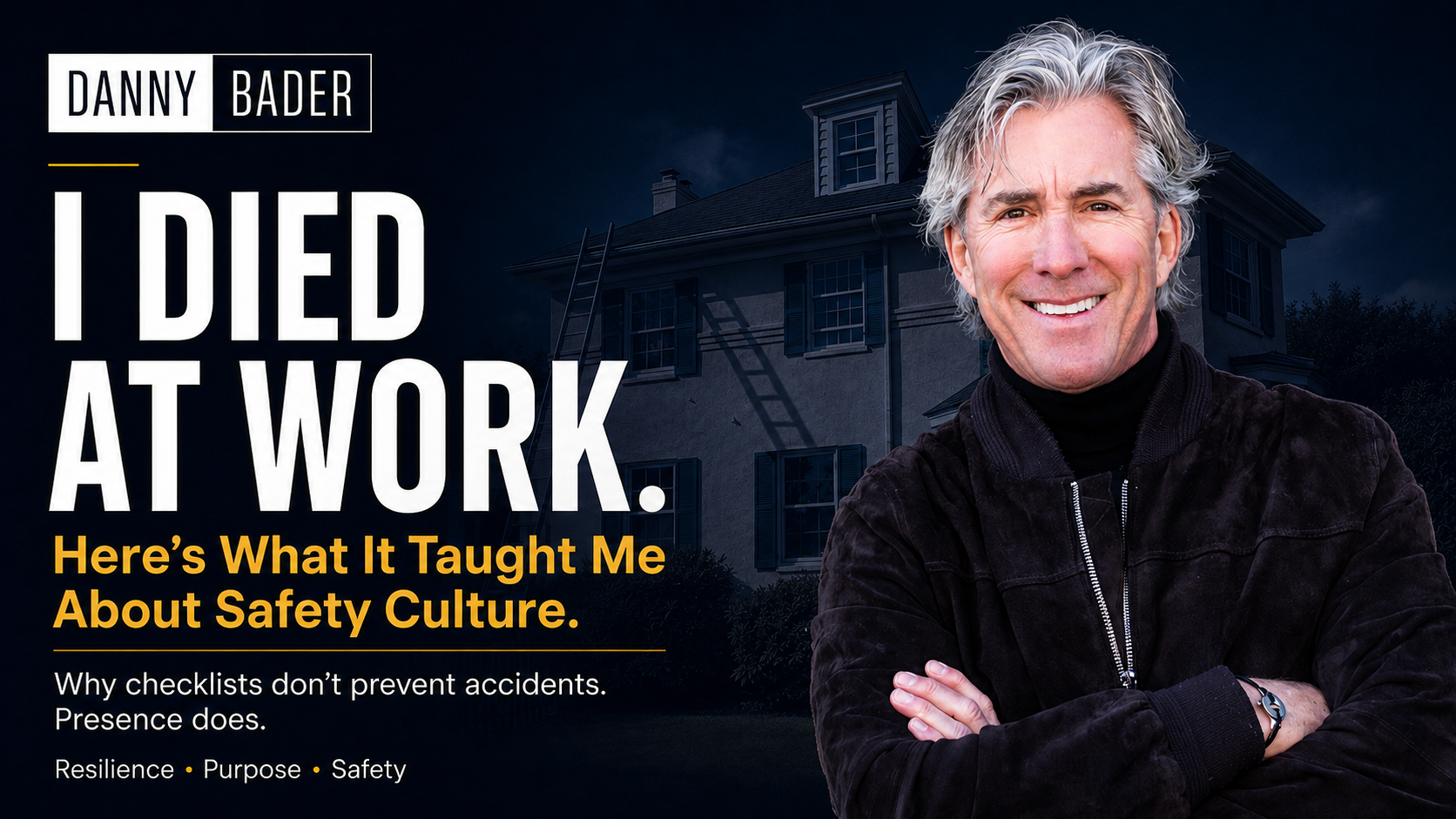
What does a real workplace safety culture look like? It's the combination of two things: the protocols and checklists everyone can see, and a safety mindset most programs never touch, the discipline of being mentally present where your body already is. I learned the difference the hardest way possible.
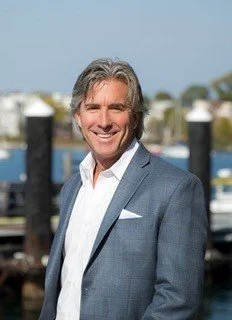
I'm Danny Bader, a safety keynote speaker and bestselling author. On July 28, 1992, my buddy Bruce and I were electrocuted while lowering a metal ladder off a house at the end of the day. The ladder contacted an 8,000-volt power line. Bruce died. My heart stopped too, and Bruce's brother Stu came down off the roof and gave CPR to both of us. I came back. Bruce didn't.
I've been speaking about that day for roughly 30 years, to construction crews, utilities, energy companies, and corporate teams. Here's what I've learned about why accidents happen, what safety actually feels like, and what leaders should do when the worst day arrives.
The Conditions That Make a Workplace Accident Possible
When I think about what really made our accident possible, it wasn't one dramatic mistake. It was two sets of conditions stacking on top of each other.
The physical conditions were there: wires along the street, close to where we were working. But the mental conditions were there too. It was the end of the day. We were both already thinking about where we were going next. We'd done this task before, so we were going through the motions, on automatic pilot.
That's the part most safety programs underweight. We weren't reckless. We weren't untrained. We were distracted in the most ordinary way possible, and around electric lines, ordinary distraction is enough. In a corporate environment, losing focus means you miss an email or show up late to a meeting. On a job site, distraction can have far greater consequences.
And the aftermath doesn't fade the way people expect. I once heard a saying: you can put a nail in a fence and you can pull the nail out, but the hole is still there. That's what it was like for Stu and me in the years after. Time did not heal that wound. When a team loses someone, that hole stays in the fence, and leaders need to know that going in.
What It Actually Feels Like to Be Safe at Work
"Safety culture" gets discussed constantly in EHS circles, usually as a policies-and-posters conversation. Here's what I believe it actually is on a construction site, a well pad, or a roof: a combination of protocol and presence.
The protocol side is real and non-negotiable. If we're on a site at a nuclear power plant, we always back the trucks in when we arrive, so if we need to get out quick, we can get out quick. You keep your distance from the machinery. You wear the hard hat. You wear the harness on the roof. Follow the guidelines. Follow the checklist.
But the guidelines only get you halfway. The other half is a safety mindset that says: my body is here right now. I'm here physically. I need to be here mentally. That's the piece no checklist can enforce, and it's the piece that was missing for Bruce and me at the end of that day in 1992.
The Safety Mindset vs. Compliance: Where Distraction Really Comes From
Here's the counterintuitive part, and it's the reason my safety keynotes spend as much time on life as they do on work.
When I ask crews what distracts them most on the job, nobody says the machinery. They say: life. The things I've got to do. The things I forgot to do. The relationships where I'm struggling. The bills I need to pay.
That means the most powerful safety intervention isn't another layer of compliance. It's helping people get their lives moving in the right direction, because when life is coming along a little better and you can see yourself making progress, you can be fully present on the job site. Compliance manages the physical conditions. Only a person whose head is clear can manage the mental ones.
This is why my message to safety audiences is the same one I bring to every audience: live with a radical reverence for your life. With a safety crowd I take it one step further than I would with a corporate audience, because the stakes are different. The point isn't just to live fully. It's to make sure you come home at the end of the day. My framework, the Back to Life Blueprint, gives people five principles for that: Vision, Know Yourself, Seek Support, Be Still, and Evolve. A crew member with a vision for their life has a reason to be present for it.
It took me a while to talk about the accident publicly. The first time was a goal-setting workshop at MBNA, where I worked in the late nineties, when I shared how the accident gave me a deeper reverence for life and a reason to set real goals. Thirty years later, that connection between how you live and how safely you work is still the core of everything I teach.
What Leaders Should Do After a Serious Workplace Accident
I'm often asked what I'd tell the leadership of a company that just had a serious accident. Not from a stage. In the room, as an advisor.
First, honestly, I'd give them all a hug and tell them to take a deep breath. Then I'd say: listen, that happened. It's in the past. Right now we need to be very present and deal with the struggle we're in. That means three questions, answered fast:
What needs to happen for us to move forward?
What needs to happen to take care of the people who were impacted?
What did we learn from this that we need to communicate to others very, very quickly?
Then take another deep breath. Life has its struggles, and you will move through this and come out stronger. I say that as someone who has lived on both sides of a workplace fatality, as the casualty and as the survivor. The hole in the fence stays. The team can still stand back up.
Frequently Asked Questions
What is a workplace safety culture?
A workplace safety culture is the combination of visible systems, protocols, checklists, and equipment standards, and an invisible safety mindset where workers are mentally present, not just physically present. Both are required. Protocol without presence is how experienced crews doing routine tasks still get hurt.
What is the difference between compliance and a safety mindset?
Compliance manages the physical conditions of an accident: distances, equipment, procedures. A safety mindset manages the mental conditions: distraction, autopilot, and the life stresses people carry onto the site. Most serious accidents, including my own, happen when the physical conditions and the mental conditions line up at the same moment.
Why do experienced workers still have accidents?
Because familiarity creates autopilot. My accident happened at the end of the day, doing a task we'd done many times, while our minds were already on where we were going next. Experience reduces skill errors but increases the risk of going through the motions, which is why presence has to be trained as deliberately as procedure.
What should leadership do immediately after a serious workplace accident?
Be present with the struggle rather than rushing past it. Answer three questions quickly: what needs to happen to move forward, how will you take care of the people impacted, and what did you learn that must be communicated to others right away. Then steady the team: this will be moved through, and the organization can come out stronger.
Come Home at the End of the Day
The core insight is this: accidents happen when physical conditions and mental conditions meet, and only a culture that cares about both, the checklist and the human being, prevents them. That's what a radical reverence for your life looks like on a job site, and it's what the Back to Life Blueprint builds in the people who practice it.
Bring This Safety Keynote to Your Next Conference
I deliver this keynote to safety conferences, utility and energy companies, construction associations, and corporate EHS events. If your teams follow the protocols but struggle with presence, this keynote gives them a reason to be fully here, so everyone comes home at the end of the day.